

Introduction
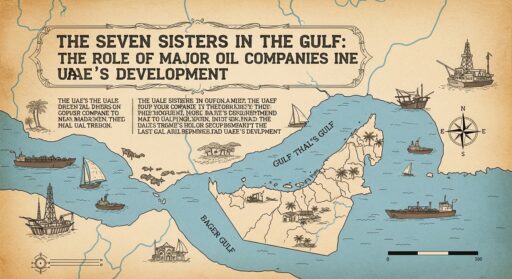
The monumental task of unlocking the UAE’s oil wealth did not fall to the sheikhdoms alone. It was facilitated by the technological might, capital, and global market access of the world’s most powerful petroleum corporations, collectively known as the “Seven Sisters.” For decades, these companies—Exxon, Mobil, Chevron, Texaco, Gulf Oil, Shell, and BP—were the dominant force in the global oil industry, and their presence in the Trucial States was transformative. Their role was complex, a blend of pioneering engineering, corporate ambition, and colonial-era dynamics that left an indelible mark on the region’s physical and economic landscape. This article examines the multifaceted impact of the Seven Sisters, from their initial exploration efforts to their eventual evolution into partners of the UAE’s national oil companies.
History
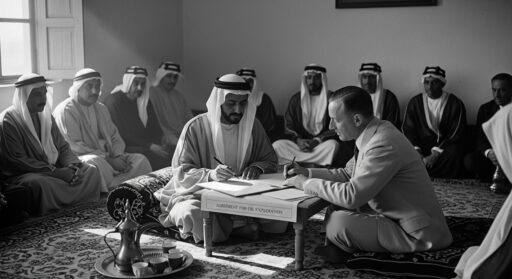
The involvement of the Seven Sisters in the Gulf was formalized through the consortium model, primarily the Iraq Petroleum Company (IPC). The “Red Line Agreement” of 1928 bound these major companies to work together within the bounds of the former Ottoman Empire, which included the Trucial Coast. This meant that the exploration rights granted by Sheikh Shakhbut of Abu Dhabi in 1939 were to a consortium, not a single company. For the next two decades, these companies conducted extensive geological surveys and seismic testing. The first commercial discovery in Abu Dhabi was made at Bab in 1960, followed by the massive Bu Hasa field in 1962. In Dubai, Continental Oil (Conoco, not one of the original Sisters but a major player) discovered the Fateh field in 1966, marking the start of that emirate’s oil journey.
Key Features
The operations of the Seven Sisters were characterized by several key features:
- Technological Transfer: The Sisters brought advanced Western technology to a region that had none. This included seismic imaging, rotary drilling rigs, and complex refinery operations, introducing entirely new engineering disciplines to the local workforce.
- Expatriate Workforce: Initially, almost all technical and managerial positions were held by expatriates. The companies established self-contained camps with their own housing, schools, and hospitals, creating isolated “bubbles” of Western life in the desert.
- Infrastructure Development: While their primary goal was oil extraction, the companies inadvertently built critical infrastructure. They constructed the first proper jetties, roads, power plants, and water desalination units to support their operations, which later served as the nucleus for broader national development.
- Training and “Arabization”: Over time, and often under pressure from the ruling sheikhs, the companies began training local Emiratis, starting with simple manual jobs and gradually moving into technical and administrative roles. This slow process of “Arabization” was the seed for the future nationalization of the industry.
Cultural Significance
The arrival of the Seven Sisters initiated the UAE’s first sustained, large-scale encounter with the modern industrial West. The sight of massive drilling rigs rising from the desert and the influx of foreigners with different languages, customs, and work ethics was a cultural shock. It created a new social hierarchy, with well-paid expatriate oil workers living alongside a local population still largely engaged in traditional pursuits. This interaction, while sometimes fraught with misunderstanding, also exposed Emiratis to new concepts of corporate organization, time management, and technical education. It began to reshape aspirations, showing a generation of young people a potential future beyond fishing, herding, and trading.
Modern Relevance
The relationship between the UAE and the Seven Sisters has fundamentally changed, but it has not ended. The era of their unilateral control is long over, nationalized in the 1970s with the creation of the Abu Dhabi National Oil Company (ADNOC) and its counterparts. However, the legacy of their early work remains in the vast oil and gas fields that still power the UAE’s economy. More importantly, the Sisters have transitioned from concession-holders to strategic partners. Companies like Shell, BP, and ExxonMobil now work closely with ADNOC in complex joint ventures, bringing cutting-edge technology for enhanced oil recovery, gas development, and petrochemicals. They are key investors in the UAE’s downstream and renewable energy projects, a testament to a relationship that has evolved from one of dependency to one of mutual strategic interest.
Conclusion
The Seven Sisters were the midwives of the modern UAE. Their capital and technology unlocked the geological treasure chest that made national development possible. While their early role reflected the power imbalances of the time, their presence forced a rapid and often challenging modernization. The UAE’s great success was not in rejecting these corporate giants, but in skillfully learning from them, eventually asserting sovereign control, and transforming a colonial-era relationship into a sophisticated, 21st-century partnership. The story of the Seven Sisters in the Gulf is a central chapter in the UAE’s journey, illustrating how a nation can engage with global capital on its own terms to build a prosperous and self-determined future.