

Introduction
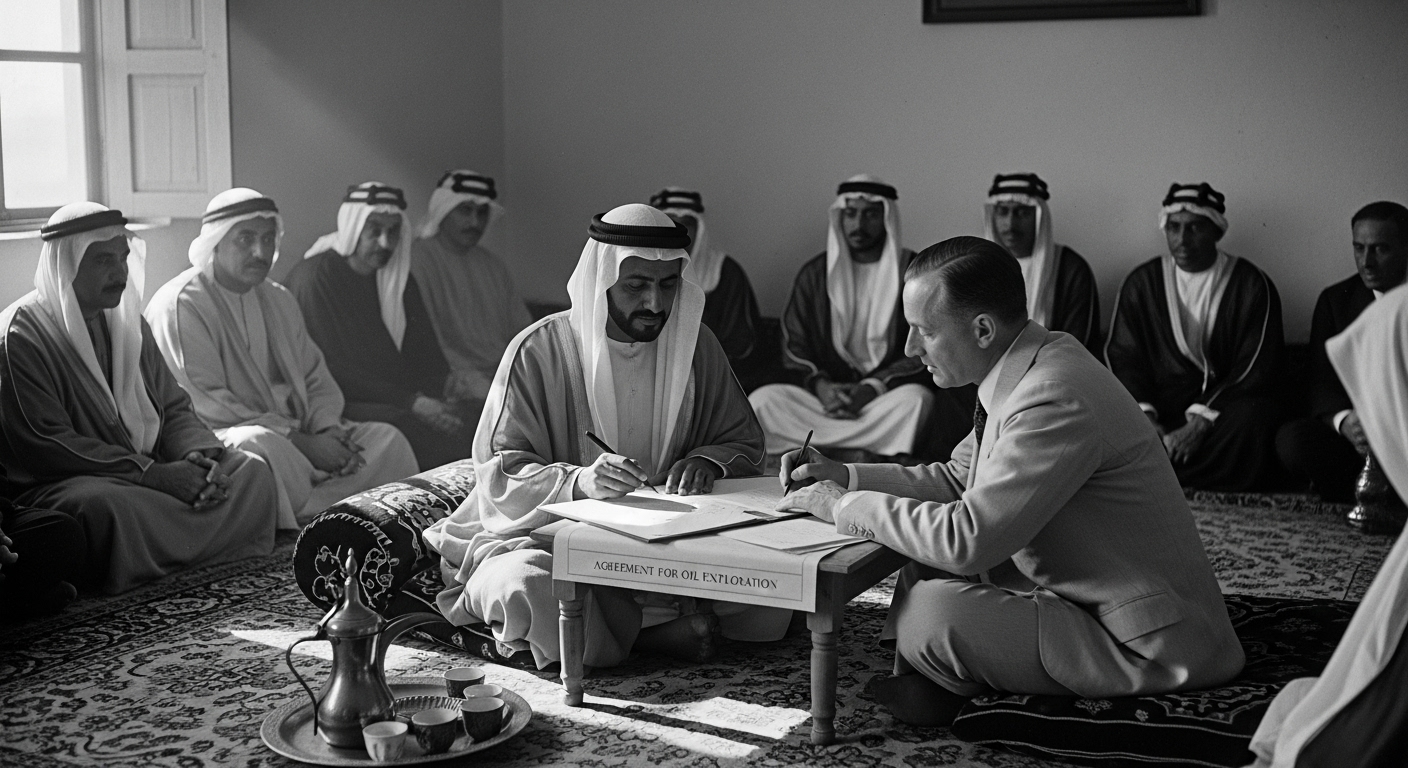
The story of the UAE’s transformation is inextricably linked to oil. But before the first barrel was exported, before the revenues began to flow, a series of critical, high-stakes negotiations took place in the 1930s that would irrevocably alter the destiny of the Trucial States. The signing of the oil concessions was the pivotal moment—the turning of a key in a lock that had sealed the region for centuries. These were not mere business deals; they were complex diplomatic instruments that bridged vast cultural and technological divides, bringing the ancient traditions of the Arabian Gulf into direct contact with the industrial ambitions of the West. This chapter explores the dramatic story of these concessions, the far-sighted rulers who signed them, and the profound gamble that would ultimately lay the foundation for a modern nation.
History
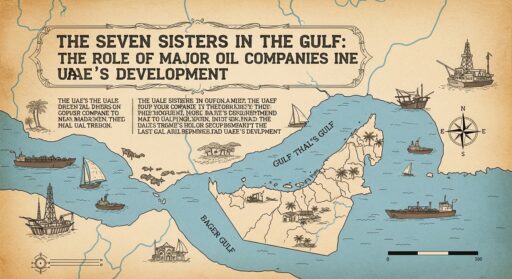
In the early 20th century, the Trucial Coast was a British protectorate, a collection of emirates whose economies were reeling from the collapse of the pearl trade. The global depression and the invention of cultured pearls had devastated the primary source of income for the region’s coastal communities. Against this backdrop of economic hardship, the first glimmers of interest in the region’s potential oil reserves emerged. Major oil companies, having struck oil in Iran and Bahrain, began to look eastward. The first significant move came in 1935, when the ruler of Abu Dhabi, Sheikh Shakhbut bin Sultan Al Nahyan, was approached by the Iraq Petroleum Company (IPC), a consortium of what would become the “Seven Sisters.”
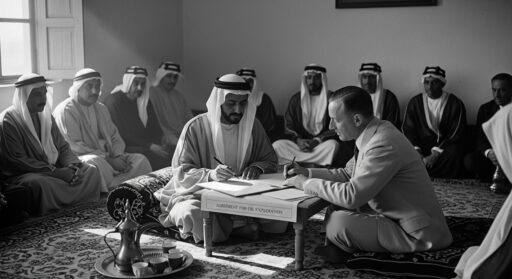
The negotiations were protracted and complex. Sheikh Shakhbut, a cautious and prudent leader, was wary of the promises of foreign companies and the potential impact on his people’s traditional way of life. The British Political Agent, acting as an intermediary, facilitated the talks. After years of deliberation, on 11 January 1939, Sheikh Shakhbut signed the 75-year oil concession agreement with the IPC’s subsidiary, Petroleum Development (Trucial Coast) Ltd. The signing ceremony itself was a symbol of the times, held on the deck of the British warship HMS Bideford. The concession granted the company exclusive rights to explore for and produce oil in exchange for an initial payment and annual rents, with the promise of royalties upon discovery.
Key Features
The concession agreements were meticulously crafted documents that reflected the power dynamics and uncertainties of the era. Key features included:
- Exclusive Rights: The companies were granted a monopoly over oil exploration and production within a defined territory for a long period, typically 75 years.
- Financial Terms: The deals included upfront signature bonuses, which provided immediate, albeit modest, cash inflows to the struggling sheikhdoms. They also stipulated annual rental payments until oil was found, and a royalty per ton of oil exported once commercial production began.
- Sovereignty Clauses: The agreements explicitly recognized the sovereignty of the local rulers over their lands. This was a crucial point for leaders like Sheikh Shakhbut, who were determined to maintain their authority.
- Limited Local Impact: Initially, the concessions had a minimal immediate impact on the local population beyond providing some employment opportunities. The real work of geological surveying and test drilling was a slow, uncertain process that took years.
Cultural Significance
The act of signing the concessions was a profound cultural moment. For the Bedouin and maritime societies of the Trucial States, land and sea were not commodities to be bought and sold, but sources of life and identity. The concept of granting a foreign entity the right to drill deep into the earth was alien. The negotiations, often conducted through the traditional majlis, required a leap of faith by the rulers. They were betting on an invisible, unproven resource, trusting that the modern world’s “black gold” could offer a future more secure than the pearling and trading of their ancestors. It marked the beginning of a slow but steady shift from a subsistence economy to one integrated into the global capitalist system.
Modern Relevance
The legacy of the concession agreements is the bedrock of the modern UAE. The oil revenues that eventually flowed from these deals provided the capital for Sheikh Zayed bin Sultan Al Nahyan and his fellow rulers to build a nation from scratch—funding infrastructure, healthcare, education, and housing. Furthermore, the model of these early agreements evolved into the modern partnerships between the UAE’s national oil companies (like ADNOC and ENOC) and international firms. The lessons learned from these initial negotiations—about protecting national interest, ensuring fair value, and maintaining sovereign control—directly informed the UAE’s savvy and strategic approach to managing its hydrocarbon resources within OPEC and on the global stage. The concessions were the first step in a learning curve that transformed the UAE from a passive recipient of terms to an active, powerful player in the global energy market.
Conclusion
The signing of the oil concessions was far more than a historical footnote; it was the genesis of modern Emirati statehood. The pens that touched the paper in the 1930s did not just sign contracts; they set in motion a chain of events that would lift a region from poverty to prosperity. The cautious optimism of rulers like Sheikh Shakhbut, facing an uncertain future, was ultimately vindicated. While the UAE now boldly strides towards a post-oil future, it does so on a foundation built by those initial, courageous agreements. The concessions opened the door, allowing the Trucial States to step out of the shadows of a difficult past and into the bright, demanding light of the modern era.